Author Archives: Technosoft

  1. How does the Internet of Things ecosystem adapt to cloud computing ?

    Leave a Comment

    Introduction

    The internet of things (IoT) has developed in a fast way, linking billions of devices that are capable of communicating and sharing data. With these devices continuing to spread, this has led to the need for efficient data management, processing and storage solutions being on the rise. Cloud computing comes into play in such a case. This enables IoT solutions  ecosystems to process large amounts of information and perform complex calculations through providing elastic, on- demand computational resources.

    In this article, we will comprehensively explore how the IoT Embedded Systems / IoT Electronics ecosystem adapts into cloud computing delving into the various roles, benefits and applications associated with this powerful blend. 

    To give you better insights on our expertise, we will also discuss how Technosoft GmbH is dedicated to their services and our skilled engineer’s offerings in this area by giving an insight on how they help companies achieve their goals relating to internet of things and cloud computing.

    Table of Content

    1. How Does Cloud Computing Play A Role In The Internet Of Things (IoT) Ecosystem?
    2. What Is The Difference Between IoT And Cloud Computing?
    3. Which Is More Important IoT Or Cloud Computing In Today’s Technology?
    4. What Are The Applications Of The Internet Of Things (IoT) That Use Cloud Computing?
    5. Technosoft’s suite of IoT & Cloud Services

    Key Takeaways

    • Cloud computing provides vital scalable flexible computing resources needed by IoT ecosystems.
    • Security is improved, so’s data management and device communications when integrated with cloud computing.
    • Better continuity improved response time reduced reliance on hardware for businesses
    • Technosoft offers a comprehensive suite of IoT and cloud services which helps customers effectively exploit these technologies.

    How Does Cloud Computing Play A Role In The Internet Of Things (IoT) Ecosystem?

    Unleash Remote Computing Potential

    Cloud computing was introduced revolutionizing the capabilities of IoT devices particularly those with minimal processing abilities. As opposed to what it would be able to do on its own where computational tasks are offloaded onto the cloud integration, an IoT device can perform even more complex actions. Such remote computing potential is quite paramount in cases like smart cities where lots of information from different sensors should be processed as well as analyzed instantly in order to manage traffic or utilities among other urban systems effectively.

    Increasing Security and Privacy

    Most IoT devices handle confidential data hence the importance of ensuring that they are secure and private. In order to avoid unauthorized access or data breaches such as encryption, multi-factor authentication and continuous monitoring is employed by cloud computing providers. Through integrating IoT systems with services offered in the cloud organizations are able to use these strong security frameworks for safeguarding their information.

    We have consistently observed and recommended the possibility of centralized security management through cloud computing, which enables faster identification and mitigation of potential threats. Where devices may be distributed over large geographical areas, this centralization is crucial within an IoT ecosystem.

    Increasing Security and Privacy

    Using the Power Data Integration

    The amount of data generated by IoT devices is huge hence needs to be collected into one place and then analyzed with a view of extracting useful information from them. Effective data integration requires a lot of processing power which is why it is essential for large datasets from many sources managed by infrastructure provided by cloud computing. This capability is indispensable in applications like predictive maintenance whereby failures in equipment can be predicted out of multiple sensor readings.

    By using cloud computing, our data engineers can help your business enterprises achieve comprehensive data analysis and visualization, turning raw figures into useful information.

    For instance, wearable technologies can combine their data on the cloud, thereby providing real-time monitoring capabilities about patient health metrics and leading to better recovery outcomes.

    Embracing Agility With Little Hardware Dependence

    One of the major benefits of cloud computing is to minimize physical dependency on hardware. However, in traditional IT structures, large amounts of money have been invested in hardware which can limit the scalability of business. This implies that cloud computing is an alternative that allows companies to purchase additional computing resources as they require them.

    This agility will be particularly useful for IoT applications in which there are frequently varying numbers of connected devices. Here, your business can deploy more or less computational capacity according to demand without over provisioning on hardware.

    Business Continuity

    Within any organization business continuity is always a critical issue and the same applies to IoT environments. Cloud computing enhances business continuity by providing strong data backup and disaster recovery solutions. It ensures that data is not lost and operations can resume very fast even if there is a hardware failure or cyber-attack.

    In most IoT applications, continuous operation is paramount. For example, in industrial settings, IoT devices monitor machinery performance and environmental conditions. Any downtime can result in significant losses.Cloud based backup and recovery solutions guarantee constant availability of the necessary information and preservation of functionality.

    Communicating Across Devices And Touchpoints

    For successful operation, IoT ecosystems depend upon seamless communication between devices as well as touchpoints.Cloud computing enables this through establishing one central platform where devices can join together to share information.This coherence becomes important when dealing with application like smart homes whereby different devices such as thermostats lights security systems should interact for a meaningful user experience.

    Using cloud services for instance, a smart home system may link a thermostat with a smart lock so that some heating adjustments are made when nobody is at home. Such level of integration increases convenience to users while saving power consumption.

    Increasing Response Time & Data Processing

    In Internet Of Things (IoT) apps quick response time along with efficient data processing are essential. Cloud computing platforms are designed specifically to handle big volumes of data at high speeds.Thus, it significantly reduces latency.This improvement is important because there are applications that need real-time data analysis and prompt actions to be taken like autonomous vehicles or industrial automation systems.

    For example, in an autonomous vehicle, sensors constantly generate data that needs to be processed in real-time to make driving decisions. This is possible because of cloud computing which processes data with utmost speed thus helping the car respond right away to changes on the road.
    What Is The Difference Between IoT And Cloud Computing?

    What Is The Difference Between IoT And Cloud Computing?

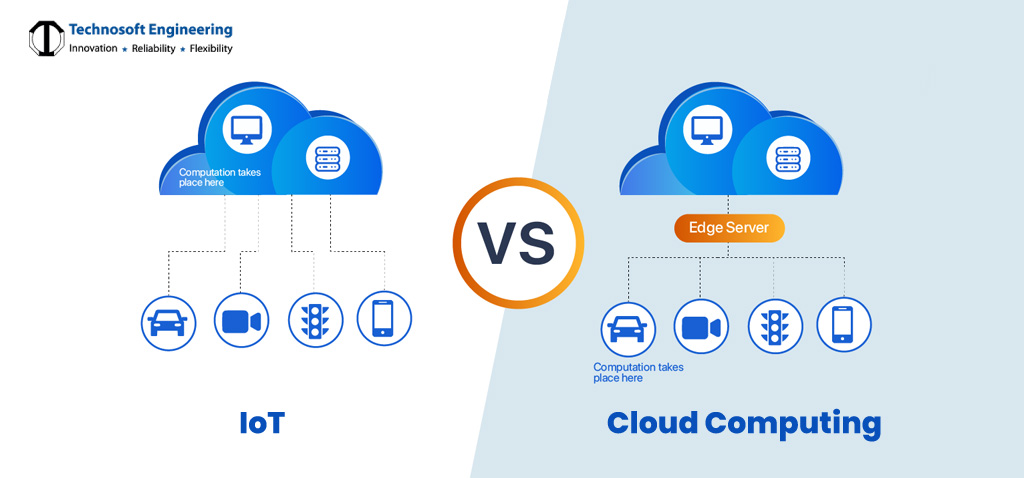
    Though IoT and cloud computing have close connections, they perform different roles. IoT is dedicated to the connection of devices as well as making them capable of collecting and sharing data. This information must be managed and analyzed as it is produced by such items which include smart appliances, sensors, and actuators.

    Alternatively, cloud computing offers an infrastructure for storing, processing and managing such data. It has internet accessible resources like virtual servers or storage that can expand to accommodate very many users. While IoT comprises data generation; cloud computing, on the other hand, involves processing this data so that it can be used in future.

    Which Is More Important IoT Or Cloud Computing In Today’s Technology?

    In today’s technology landscape both IoT as well as cloud computing are important depending on their application or industry context. Based upon the industry application, we can choose IoT or cloud solution, a technology that fits best with our business application. 

    Sectors such as healthcare, agriculture and smart cities use IoT devices more to their advantage. Sectors like finance and e-commerce generate a lot of data for analytics, therefore it requires cloud computing services. 

    What Are The Applications Of Internet Of Things (IoT) That Use Cloud Computing?

    In combining IoT with cloud computing several new applications have come up in various fields but some few examples are:

    • Smart Cities:

      Connected devices through clouds monitor urban infrastructures which include traffic lights, waste management systems as well as public transportation services.Cloud-based analytics help retailers make data-driven decisions optimizing inventory management and improving customer experience.

    • Healthcare:

      Wearable fitness trackers and remote patient monitoring devices are among the IoT that collects health data and sends it to the cloud for analysis. This information allows providers in healthcare to monitor patient health metrics in real-time resulting in timely interventions as well as individualized treatment plans.

    • Agriculture:

      With IoT sensors, farmers can keep track of soil moisture, temperature and other environmental factors on their farms. The cloud receives these statistics and uses them to improve irrigation schedules while nitrogen levels are to be increased during which crop yields will also go up.

    • Industrial Automation:

      In this case, there are several connected devices known as IoT that monitors machinery performance, detects defects as well as predicts repair needs within manufacturing settings.Cloud computing platforms analyze this data so as to stop breakdowns of equipment, reduce downtime and increase productivity overall.

    • Retail:

      Salespersons at supermarkets use IoT gadgets to measure stock levels, watch customers’ behavior or manage their supply chains. Through the use of trade analytics retailers now make more informed choices about stock-holding policies while equally enhancing customer experience.

    Technosoft’s suite of IoT & Cloud Services

    Technosoft’s suite of IoT & Cloud Services

    To leverage these technologies Technosoft provides a full range of services for both IoT and cloud; they include:

    Consulting & Advisory

    These determine how the business is going to benefit from using cloud services over other existing means one premises servers vs data centers cloud computing that’s developed especially for consumers or e-commerce to meet the demands of their businesses.  

    Design & Development

    Design and development services for IoT applications are provided by us, which include seamless integration with cloud platforms. Our professionals use the latest technologies and best practices to ensure robust and scalable solutions.

    Verification and Validation

    Our verification and validation services help in ensuring that your IoT solutions conform to industry standards and perform reliably in real life scenarios. We undertake comprehensive testing and quality assurance to identify potential problems that may arise before deployment.

    Pre-Certification Support

    Technosoft assists with pre-certification support so that you obtain approval for your IoT products through adhering to regulatory requirements. Through our understanding of industrial standards as well as certification procedures, every product you make will be able to meet all regulations.

    Case Study

    For more information on our successful projects refer to our detailed case studies:

    Automated Meter Reading System Development

    Hydraulic Telescopic Boom Crane Intelligent Monitoring System

    Closing Thoughts

    The integration of the Internet of Things (IoT) ecosystem with cloud computing is revolutionizing many industries by facilitating enhanced data collection, processing, and analysis. By utilizing cloud computing, IoT systems can enjoy greater scalability, security, as well as functionality. This combination is fueling innovation across various sectors; thereby opening up new possibilities for businesses.

    Technosoft’s commitment is evident from its array of offerings: a complete set of IoT services including consulting right up implementation stages along with related legal requirements such as privacy laws. It is our level of expertise coupled with dedication that enables clients like yours to maximize on these technologies towards achieving their organizational goals thus beyond any doubt.

    While the role of cloud computing will remain integral in unlocking the full potentiality of IoT even in future times, we shall keep assisting you throughout all the necessary steps during its evolution.
  2. What Is Engineering Documentation ?

    Leave a Comment

    Table of Contents

    1. Key Electrical Documentation Types Used at Technosoft GmbH
    2. What Is the Importance of Technical Documentation in Engineering?

    Engineering documentation is an essential component of collaboration on engineering projects. 

    For example, when designing a bridge, multiple disciplines need to work together, such as civil engineers, structural engineers, and architects.

    Consider the fact that the civil engineer can create detailed drawings of the site plan and utility connections. On the other hand, the structural engineer can provide calculations for the size and placement of beams. Additionally, architects may contribute aesthetic elements like material selection or color schemes.

    Without proper engineering documentation, these different parties would have difficulty understanding each other’s needs or requirements. Documentation serves as a common language that allows everyone involved in the project to communicate effectively and share information about what they are doing.

    Furthermore, effective documentation practices aid in preventing errors during the construction phase. This is because engineers can refer back to their plans if they see something going wrong or missing. Additionally, having all relevant information available in one place makes it easier for them to point out errors that might have been overlooked otherwise. 

    Keeping a meticulous record of changes made in each stage will help in future maintenance. These comprehensive records serve as a guide to a trouble free future.

    The documentation helps in making a note of different generations of engineering design which helps not only in understanding the current versions but if needed will also help us to refer to the old design or process as needed in engineering technological design. 

    This is one of the reasons why many automobile companies are able to maintain and improve their existing and older models of automobiles.

    Engineering documentation has a big impact on team members, departments, and external stakeholders’ cooperation. If we take, for instance, an electrical project of massive scale where engineers, designers, contractors, procurement specialists, and clients must work seamlessly alongside each other, 

    These documents are what keep diverse teams together. Detailed project plans and progress reports help ensure everyone is working towards the same objectives within set timeframes, while specifications foster alignment among different groups involved in the execution of tasks. Collaboration platforms that allow real-time access to documents and discussions also facilitate communication between parties by making it easier for them to share information about what they are doing, which in turn enhances coordination, leading to more efficient workflows and thus better project outcomes.

    Key Electrical Documentation Types Used at Technosoft GmbH

    In order to support project management, communication, and compliance, there are various types of important electrical documents used at Technosoft GmbH. 

    Here’s an in-depth look at some of these critical records:

    • Contract:

      These are detailed agreements that outline terms, conditions, and responsibilities between contracting parties concerning their involvement in electric projects. For example, a contract could define deliverables, timelines, or even financial aspects. Such scope may be outlined, specifying mutual understanding between Technosoft GmbH and its client or partner.

    • Purchase Order:

      Purchase orders serve as formal requests sent out by organizations procuring materials from suppliers who deal with components related to electricity, such as cables, among other equipment like transformers, etcetera. Services provided by them too should not be left behind within this document type. They contain quantities required, prices quoted, delivery schedule accepted terms, thereby simplifying the purchase process and ensuring timely availability of goods needed.

    • Change Order:

      Change orders refer to any modifications made to pre-existing plan specifications, either at the design or construction stage, relating to electrical installation projects involving alterations, additions, and new features requested by the customer during the implementation period. Change captures all this information, thus ensuring transparency and effective variation management while still aligning with client expectations.

    • Letter of Intent:

      Letters of intent express one party’s willingness to proceed with specific actions regarding an electric project. A client can send an L.O.I. indicating his readiness to hire Technosoft for a job. It might contain preliminary terms, conditions, and commitments before formal agreements are reached.

    • Executive Approval:

      These signify management approval given on major decisions made towards electrical projects. For instance, budgeting, strategic direction setting, etcetera may require top-level management endorsement before being implemented. Aligning with organizational goals, budgets, and strategic objectives is therefore key to achieving such approvals. 

    These are just some of the many different types of electrical documentation that Technosoft GmbH uses during project execution, compliance monitoring, procurement facilitation, change tracking, and necessary authorization securing leading to successful completion, satisfying clients’ needs while remaining market leaders in their field. 

    In a nutshell, engineering documentation should not be seen as mere administrative duty, rather, it ought to be recognised as strategic necessities underlying success, compliance, collaboration, and innovation within any given engineering venture. Technosoft GmbH has continued  to deliver excellence, clarity, breadth, truthfulness, and engagement impact.

    What Is the Importance of Technical Documentation in Engineering?

    What Is the Importance of Technical Documentation in Engineering?

    Technical documentation is very important in engineering since it acts as a means of communication throughout the project lifecycle. Below is why it is crucial: 

    • Preservation of Knowledge:

      Elaborate technical papers capture and preserve the knowledge gained while working on a project, including insights and best practices. This continuity of information ensures that nothing goes to waste and can therefore be applied to future undertakings.

    • Efficient Communication:

      Concise, well-structured technical documents enhance smooth communication among different parties involved in a project, such as engineers, designers, clients, and regulatory bodies. It makes sure all people have the same understanding of what needs to be done, reducing confusion that leads to errors.

    • Compliance and Quality Assurance:

      Technical papers help meet industry standards, regulations, and quality requirements. They act as evidence showing that all authorized steps were followed during implementation; this simplifies evaluation against legal frameworks through audits or any other form of inspection.

    • Risk Management:

      Thorough technical work aids in recognising risks throughout the entire life cycle of a given undertaking while they are being evaluated for possible mitigation measures too early before they occur.

    • Training and Onboarding:

      Contractors, new team members, or any other stakeholder who may join later can use these files for training purposes, thus enabling them to understand their roles better and contributing positively towards the successful completion of such projects.

    • Decision Support:

      Stakeholders need accurate, up-to-date facts so as to make informed decisions; therefore, without doubt, this calls for the availability of such data, which is supported by solid facts provided by technical publications designed specifically with the decision-making process at heart.

    To summarize all this, technical engineering documentation is necessary for the storage of information, easy communication channel creation, ensuring compliance with rules for risk identification, risk analysis, and risk response planning phases, facilitation of proper staff training and induction programmes, and aiding sound choices.

    Conclusion

    In conclusion, one cannot overemphasize the significance of technological record-keeping within an engineering context. These records act as catalysts for successful project execution by promoting effective communication, ensuring that regulations are followed to the letter, helping identify and manage risks associated with various stages of undertaking them, and providing necessary guidelines during induction programmes targeted at equipping staff members with relevant skills needed for such projects. 

    It is therefore imperative that organizations invest in good-quality technical documentation, which will not only ensure the achievement of desired results but also foster collaboration between different players involved in this dynamic field of engineering.

    At Technosoft engineering consulting services, our commitment to proper documentation practices is not just about meeting the necessary regulatory requirements, but it is also about maintaining a promise and commitment to delivering exactly what was needed for your technological requirements. 

    With the help of documentation, we are able to ace the tiniest detail of the project and maintain detailed records to ensure compliance with the industry and troubleshooting for standards. 

    Connect with us today for your engineering projects and make informed decisions to achieve project success. 

  3. What is Computer Aided Engineering (CAE)?

    Leave a Comment

    Table of Contents

    1. What is Computer Aided Engineering (CAE)?
    2. How does Computer Aided Engineering (CAE) work?
    3. Advantages of Computer Aided Engineering (CAE)
    4. Disadvantages of Computer Aided Engineering (CAE)
    5. Who Uses Computer Aided Engineering?
    6. What Industries Use CAE? for Industrial Applications?
    7. What Does A CAE Engineer Do?
    8. How Has Computer Aided Design Helped Engineers?

    Key Takeaways

    • Computer Aided Engineering Services (CAE) applies computational methods as well as simulations in engineering design, analysis, and optimization.
    • This includes design optimization, simulation capabilities for various physical phenomena, cost and time savings, interdisciplinary integration, accuracy, and reliability.
    • Using this technique results in improved product performance, reduced development costs, shorter time-to-market cycles, and better decision-making in engineering applications.

    Today we are going to discuss computer aided engineering(CAE), which also refers to modern technology, which has revolutionized how engineering design, analysis, and optimization are done in the context of engineering processes as well as product development

    Unlike traditional approaches that depend heavily on the production of physical prototypes and subsequent iterative testing, this unique technology of CAE utilizes computer-based techniques and simulations to create a virtual environment in which engineers can explore, review, and improve their designs with remarkable accuracy and efficiency.

    Computer aided engineering services, at its core, is an encompassing suite of software applications, algorithms, and modeling techniques that empower engineers to delve deep into their designs, exploring elements such as structural integrity, material properties, fluid dynamics, and even thermal behavior, among others. 

    As opposed to conducting actual experiments on these problems, complicated relationships among different phenomena could be analyzed using CAE, thus allowing an assessment of how different designs would work once they were implemented under normal conditions.

    One major advantage of computer aided engineering is its capability to support design optimization. Engineers can make any number of changes to the design and evaluate it against various performance, transportation characteristics, parameters, and other considerations to ensure that they achieve the best possible results. 

    Such an iterative process within the computer-based domain greatly reduces the need for expensive physical models or extensive testing periods, thus limiting the expenditure involved during the manufacturing stage and reducing the entire cost of making new products.

    Furthermore, computer aided engineering services facilitate interdisciplinary integration by integrating multiple engineering disciplines into one seamless platform. Engineers may then view a culmination of all aspects when designing their products, from the metals used to build them up to the forces acting upon them during operations until the end of their lifecycle.

    In short words, CAE helps engineers break new ground in terms of innovation while promoting high-level creativity coupled with accuracy at every point when designing products. It uses computational capabilities drawn from CAE to produce solutions that meet today’s needs fully optimized.

    • Design Optimisation: With this tool, various parameters are investigated along with their influence on performance and efficiency.
    • Simulation Capabilities: It can be used to analyze such complex physical phenomena as fluid dynamics, structural mechanics, thermal behavior, electromagnetic properties, etc.
    • Cost and Time Savings: By cutting out the need for a prototype or extensive use of testing, CAE has been able to reduce costs and hence save time in developing new products.
    • Interdisciplinary Integration: Various engineering disciplines are integrated into one system through CAE, thus guaranteeing full examination and holistic design answerability.
    • Accuracy and Reliability: The application of enhanced algorithms and models in CAE makes possible very accurate predictions that facilitate making decisions.

    How does Computer Aided Engineering (CAE) work?

    How does Computer Aided Engineering (CAE) work?

    If you dive deep into it, computer aided engineering (CAE) is based on sophisticated computational techniques combined with simulations. Let’s take a close look at it:

    • Simulation modeling:

      starts with creating intricate digital models that mirror the physical characteristics and behaviors of the engineering system or product under investigation. These typically include elements like material properties, geometric shapes or forms, structural components, and fluid features, among others.

    • Analysis through Algorithms:

      These digital models are then subjected to advanced algorithms and mathematical models within the CAE software. In other words, these algorithms portray different scenarios and interactions that can predict how the product or system will behave when it is functioning under different working conditions.

    • Virtual Testing:

      A wide range of virtual tests and simulations are performed by engineers using CAE, which include stress analysis, vibration testing, fluid flow simulation, heat transfer studies, and electromagnetic analyses, amongst others. By enabling a detailed examination of performance characteristics and other aspects of design behavior during the developmental stage, virtual testing helps engineers adjust and optimize the designs before any physical prototypes are made.

    Advantages of Computer Aided Engineering (CAE)

    • Cost Savings:

      This becomes possible due to CAE because lesser quantities for physical prototypes and vast amounts of testing material costs are significantly cut.

    • Time Efficiency:

      The general product development timeline tends to be quicker as a result of streamlining the design and analysis stages using CAE. They can go through many designs quickly, identify problems at an early stage, and make informed decisions promptly, thus accelerating products’ time-to-market substantially.

    • Improved Accuracy:

      Engineers carry out very precise simulations by employing CAE, which assists them in predicting and understanding the behavior of complex systems better. Better-informed design choices based on this accuracy lead to optimized performance levels and improved reliability.

    Disadvantages of Computer Aided Engineering (CAE)

    • Complexity:

      Mastering utilization tools like those associated with CAE requires specialized training and expertise. Simulation modeling as well as analysis intricacies may prove difficult for engineers who do not know much about these complex programs.

    • Computational Resources:

      Sometimes performing complicated simulations with CAE requires significant computational resources like HPC systems, leading to longer simulation times or hardware resource addition needs.

    Who Uses Computer Aided Engineering?

    With the help of analytical approaches such as Computer Aided Engineering, it is common among engineers from various fields, including mechanical engineering, electrical engineering, civil engineering, aerospace engineering, and automotive engineering, among others. CAE is a common tool for professionals in designing, analysis, and optimisation tasks throughout many industries.

    Who Uses Computer Aided Engineering?

    What Industries Use CAE? for Industrial Applications?

    CAE has made significant progress in bridge and tunnel construction for buildings and automobile projects. For example, it can be used to analyze the structural integrity of a model bridge or evaluate whether a proposed tunnel would withstand anticipated seismic events.

    What Does A CAE Engineer Do?

    A person whose specialization lies in the use of computer aided analysis software programmes as well as techniques to analyze, simulate, and optimize engineering designs is known as a CAE engineer. He works with diverse teams so that design meets its performance requirements while taking into account safety standards and regulatory compliance.

    How Has Computer Aided Design Helped Engineers?

    Computer Aided Design (CAD) revolutionized the field of engineering, enabling engineers to create complex digital models for products and systems. The combination of CAD and CAE improves the accuracy of design, facilitates rapid prototyping, and enables efficient collaboration between different disciplines within engineering, thus enhancing innovation across various fields.

    Closing Thoughts

    In summary, modern-day technology cannot exist without computer aided engineering (CAE). Thus, it plays an important role in driving innovation, minimizing costs, accelerating the product development life cycle, and ensuring excellence in the field of engineering, among others. Moreover, this integration is going on, as can be seen from the increased relationship between CAE AI and ML across different industries; therefore, at least we can say that the future for this kind of practice looks promising, if not more innovative than what we have today.

    At Technosoft engineering consulting services, our team of highly skilled engineers will bring their decades of experience and expertise to your project and ensure that we provide an accurate and precise solution for all your engineering needs. 

    We understand the importance of benefiting from high-end technologies such as computer aided engineering that help drive innovation, accelerate product development, and reduce costs at the same time. 

    By partnering with Technosoft for your engineering projects, we will help you overcome engineering challenges with personalized support and a collaborative approach to deliver your projects with the highest standard, quality, and efficiency.

    Experience the difference with Technosoft. Connect with us today. 

  4. What Is The Difference Between M&E – Mechanical And Electrical Engineering Service Contracts ?

    Leave a Comment

    In the field of mechanical design and engineering services, particularly in the context of contracts, it is highly important to know the differences between mechanical and electrical engineering. Both fields play integral roles in various industries, each with their own areas of expertise and applications. 

    Today we will introduce a fundamental difference between mechanical and electrical engineering service contracts, giving insights into what they cover, like scope and responsibilities, as well as key considerations that apply to each discipline.

    Table of Contents

    1. How Are Mechanical Engineering Service Contracts Different From Electrical Engineering Service Contracts?
    2. What Is Mechanical Engineering ?
    3. What Is Electrical Engineering ?
    4. What are Mechanical and Electrical Engineering Services?
    5. What do Mechanical Or Electrical Engineering Companies do?
    6. What Kind Of Projects Are Catered By Mechanical And Electrical Engineering Services Company ?
    7. How to Choose the Right Mechanical or Electrical Engineering Company
    8. Benefits of Working with Technosoft as an Electrical and Mechanical Service Provider

    Key Takeaways

    • Mechanical engineering services mainly deals with the construction designs as well as the analysis and maintenance of mechanical systems such as engines, turbines, HVAC systems, and manufacturing machinery, among others.
    • Electrical engineering focuses on studying, designing, and applying electrical systems such as power generation, transmission, distribution, electronic devices, and telecommunications infrastructure, among others.
    • Service contracts in mechanical engineering often involve tasks related to equipment installation, maintenance, repair, and optimization so that the operation of those mechanical systems can be more efficient.
    • While service activities typically include design, testing, troubleshooting upgrades, compliance audits, and safety assessments for electrical infrastructure, power systems, electronics, devices, and telecommunications, among other things,.

    How Are Mechanical Engineering Service Contracts Different From Electrical Engineering Service Contracts?

    How Are Mechanical Engineering Service Contracts Different From Electrical Engineering Service Contracts?

    What Is Mechanical Engineering ?

    Mechanical Design And Engineering centers on mechanics’ principles of materials science and thermodynamics, which are used to design and maintain various machines. In most cases where machines or equipment are involved or any system has a component for movement, this falls under the domain governed by M&E service contracts. 

    • Core Principles: This includes mechanics, fluid dynamics, material sciences, thermodynamics, etc. are the basic premises underlying this field.
    • Applications: Some examples include the automotive industry, the aerospace industry manufacturing sector, the heating, ventilation, and air conditioning (HVAC) industry, and the energy sector, among others.
    • Focus Areas: These would consist of machine design, structural analysis, fluid dynamics, heat transfer, manufacturing processes, etc.
    • Service Contract Tasks: Typical mechanical engineering service contracts may include equipment installation, maintenance, repair, performance optimization, and reliability assessments.

    Examples: For instance, the mechanical engineering service contract may refer to a regular maintenance agreement on an industrial machine, an HVAC system installation deal or an optimization project of manufacturing processes, among others. 

    What Is Electrical Engineering ?

    Conversely, electrical design engineering deals with studying and applying electrical systems and electronics to electromagnetic fields. Electrical infrastructure, power systems, electronics, devices, and telecommunications are some of the areas covered under service activities in this field.

    • Core Principles: Electromagnetism Principles, Circuit Theory, Power Systems, Electronics, and Signal Processing.
    • Applications: These would be areas such as electric power generation, transmission, distribution, electronics manufacturing, telecommunication automation, etc. where they apply too.
    • Focus Areas: Some of these are: power system designs, control systems, electronics designs, digital signal processing, telecommunication infrastructures, etc.
    • Service Contract Tasks: Tasks in electrical engineering may include electrical system design, testing, troubleshooting upgrades, Compliance Audits Safety Assessments

    Examples: One example is designing a power system for a particular location, entering into a contract to maintain specific types of electrical equipment or upgrading a control system within another business.

    What are Mechanical and Electrical Engineering Services?

    Mechanical and Electrical Engineering Services are a range of solutions that aim at the design, installation, and maintenance of mechanical and electrical systems in diverse industries. They are essential for ensuring the smooth running of infrastructure as well as equipment, right from the start until recommendations for changes can be made.

    • End-to-End Solutions: Our services provide end-to-end solutions for mechanical and electrical systems concerning design, installation, maintenance, and optimization.
    • Efficient Infrastructure: We focus on enhancing infrastructural efficiency while guaranteeing its reliability to prevent downtimes within operations.
    • Industry Expertise: Our expertise enables us to offer industry-specific solutions aligned with prevailing regulations or industry best practices.

    What do Mechanical Or Electrical Engineering Companies do?

    Technosoft Provides specialized solutions and services for mechanical and electrical systems. Our organizations conduct a variety of projects, including large-scale infrastructure installations and improving system optimizations with M&E service contracts. 

    • End-to-End Solutions: From concept to completion, our company specializes in providing comprehensive solutions that cover all aspects connected with both mechanical and electrical lifecycles.
    • Technical Expertise: This ensures accuracy and efficiency during design and implementation through the provision of technical know-how related to that specific sector.
    • Reliable Partnerships: Quality, reliability, and customer satisfaction are our top priorities in delivering tailored solutions that meet your requirements. Only trustworthy partners should offer such assistance.

    What are Mechanical and Electrical Engineering Services?

    What Kind Of Projects Are Catered By Mechanical And Electrical Engineering Services Company ?

    Different industries require distinct abilities hence, projects undertaken by various companies offering M&E service contracts and engineering services differ significantly. Such initiatives can be small or huge, depending on their level of complexity, ranging from simple installations to complex infrastructure upgrades.

    • Diverse Project Portfolio: The product engineering applications we undertake encompass wide-ranging activities, including designing HVAC systems, wiring buildings electrically, creating power distribution networks, and automating plants, among others.
    • Customized Solutions: For every project, we supply personalized answers, resulting in efficient operational ability and optimized functionality.
    • Industry Applications: Some of our areas of specialization encompass manufacturing, healthcare, commercial buildings, energy, telecommunications and transportation.

    How to Choose the Right Mechanical or Electrical Engineering Company

    Selecting the right mechanical or electrical engineering company is crucial for your project’s success. Experience, expertise, track record, and service offerings are some key considerations that inform decision-making.

    • Experience and Expertise: Companies with long service records in tasks similar to ours should be preferred.
    • Technical Capabilities: Consider the firm’s technical skills in terms of certification in applicable technologies and methodologies.
    • Project Management: Through project management approach and communication process, these firms can be evaluated for their ability to deliver projects on time and within budget.
    • Client References: The reputation of a company can be gauged by seeking references and testimonials from previous clients regarding reliability and satisfaction.

    Benefits of Working with Technosoft as an Electrical and Mechanical Service Provider

    By partnering with Technosoft, you stand to gain a lot, hence better outcomes, from your mechanical and electrical engineering undertakings.

    • Expert Team: We have a team composed of highly skilled engineers as well as technicians with vast experience in electrical and mechanical engineering who guarantee high-quality outputs at all times.
    • Innovative Solutions: To enhance the performance of systems through increased reliability while driving operational efficiency, we use the latest technologies, leveraging innovation principles.
    • Customized Approaches: Our services are designed based on your needs; therefore, they align with best practice standards for business objectives.

    You can count on us for dependable support, continuous maintenance, and proactive supervision to guarantee the sustained performance and durability of your systems.

    We will be more than happy to connect with you and discuss your project, offering world-class expertise with highly experienced engineers at our end, Technosoft is always at your service. 

  5. Cloud computing and IoT: How Do They Work?

    Leave a Comment

    Table of Contents

    1. What is IoT ?
    2. What is cloud computing?
    3. What are some advantages offered by Cloud Computing?
    4. What does IaaS PaaS SaaS CaaS stand for?
    5. What Is the Connection between IoT and Cloud Computing?
    6. Why is Cloud Computing Important for Successful IoT?
    7. Technosoft IoT & Cloud Services
    8. Case Study: Wireless Smart Home Lighting

    Key Takeaways: 

    • Synergy Between IoT and Cloud: This alliance between Internet of Things (IoT) and cloud computing is mutual because cloud infrastructure assists in scaling, secure data management and performance levels required to make Internet of Things (IoT) deployments successful.
    • Cloud Enables IoT Capabilities: Real-time data processing, advanced analytics for actionable insights, resource intensive tasks offloading and scalable storage are the ways by which cloud platforms empower IoT devices.
    • Benefits of Cloud Computing for IoT: It is vital to therefore embrace cloud computing as it provides scalability, cost efficiency, enhanced security, flexibility and reliability that are essential for maximizing the potential of IoT solutions and driving digital transformation
    • Technosoft’s Expertise: Technosoft provides extensive services in the areas of IoT as well as Cloud such as consulting, design, development, verification, validation, pre-certification support on which meet a wide range of business requirements or industry needs.
    • Case Study Example: The case study presents an example of wireless smart home lighting solution that showcases how these advances improve user experience but also enhance energy efficiency alongside operational insights such as those provided by the Internet of things (IoTs).

    Overall, the key takeaway is that cloud computing plays a crucial role when it comes to empowering IoT initiatives thereby accelerating innovation processes hence raising value across different sectors.

    What is IoT ?

    IoT Meaning? The Internet of Things or IoT refers to a network formed by the connection of electronic devices, vehicles, home appliances and any other objects with embedded sensors, software and network connectivity. 

    Let us explain you better and help you understand more about IoT, basically IoT is an internet based system that enables these devices to automatically send and receive data over the internet. This essentially means that such objects can communicate among themselves as well as with cloud-computing platforms leading to automation opportunities, data analysis abilities, and intelligent decision making.

    As per our experience at Technosoft, the categories under which IoT gadgets fall include: user products like smart thermostat, wearable or home security systems, industrial appliances like plant manufacturing sensors, connected automobiles or infrastructure monitoring apparatus. These devices generate large volumes of data that can be processed, analyzed and used in order to increase efficiency, productivity and enhance customer experiences.

    What is IoT ?

    What is Cloud Computing?

    Cloud computing is a way of offering computer services via the web which allows access to IT resources such as servers, storage drives, databases, networking tools as well as development & analytics software on demand. This implies that cloud service providers are responsible for managing and maintaining hardware on behalf of their clients so our users can simply concentrate on development of the application without any stress of the physical equipment, our offerings makes the process seamless and manageable for our users.  so the users can concentrate on developing applications without worrying about physical equipment.

    What are some advantages offered by Cloud Computing?

    • Growing/Scalability: Resources can be scaled up or down depending on how much they are needed at any given time to ensure optimal performance and cost effectiveness.
    • Flexibility: Remote work and collaboration are facilitated by cloud since it can be accessed anywhere one has an internet connection.
    • Cost Effectiveness: In this case organization only pay for what they use through a pay-as-you-go pricing model which reduces upfront costs along with overheads.
    • Reliability: On the other hand these vendors have established solid infrastructures complete with built-in redundant features plus disaster recovery solutions thereby ensuring high availability in addition to protection against loss of important information

    What does IaaS PaaS SaaS CaaS stand for?

    These different cloud service models have various levels of abstraction. Allow us to simplify these services for your better understanding. We will try to manage responsibilities along with customization options that are required by various organizations and developers.

    Based upon the industry wide application and requirements, there are 4 types of cloud service models on which we have a great experience; 

    Here are some of those ,

    • IaaS (Infrastructure-as-a-Service) :

      IaaS supplies virtualized computing resources like virtual machines, storage and networking provided via the internet. Customers can rent these resources as needed, giving them the flexibility and control over their infrastructure without requiring them to maintain or purchase physical equipment.

    • PaaS (Platform-as-a-Service):

      PaaS provides a platform with development tools, libraries and frameworks for building, deploying and managing applications. Developers are able to concentrate on coding and application logic as the underlying infrastructure is taken care of.

    • SaaS (Software-as-a-Service):

      SaaS provides software programs through internet subscriptions. Therefore users can access these softwares through a web browser without necessarily installing it in their devices.

    • CaaS (Containers-as-a-Service) :

      CaaS is used to deliver containerized applications. Containers provide lightweight, portable environments for running applications consistently across different computing environments while CaaS platforms support container orchestration, scaling and management.

    What is Cloud Computing

    What Is the Connection between IoT and Cloud Computing?

    Cloud Computing Allows for Internet of Things

    IoT deployment relies on cloud computing as a key enabler. The use of IoT and Cloud Computing infrastructure enables IoT devices to move their data storage, processing and analysis intensive tasks to remote servers. This information might come as a surprise to you, but the majority of IoT systems can work with big data while undertaking complex calculations simultaneously in real-time hence enhancing efficiency of the IoT system generally.

    Storage and Management of Cloud IoT Data

    These platforms offer strong data storage and management solutions meant for implementing solutions related to the internet of things. They also provide scalable storage options that can accommodate huge amounts of information generated by various connected devices in the internet of things among others. Additionally, organizations can use cutting edge programs in order to get insights from big data brought about by the internet of things which is useful in making informed decisions.

    Why is Cloud Computing Important for Successful IoT?

    Flexible IT Infrastructure and Scalability

    The flexibility and scalability provided by cloud computing are essential for supporting dynamic IoT environments. Consequently, companies can scale up or down their IT infrastructures according to workload requirements arising from IoT activities so as to maintain optimum performance together with resource usage. This allows them to easily adjust as their IoT projects expand over time.

    Cost Efficiency

    It is important because it saves money on capital investments for hardware that must be made at the start-up stage besides reducing operating expenses associated with managing IoT applications. Furthermore, they have an opportunity to pay only for what has been consumed by choosing a pay-as-you-go pricing model, hence optimizing cost control and budgeting when there are several IoT initiatives simultaneously underway.

    Improved Data Security

    Leading cloud providers have put up a series of security measures aimed at protecting users’ information through its lifecycle pertaining to IoT operations they engage into. This entails encryption protocols, access control mechanisms and compliance standards against unauthorized access among others employed all throughout its lifecycle so as to secure such vulnerable information from unauthorized access, breaches or cyber-attacks. This is mostly achieved through use of cloud-based security systems that enhance the overall resilience and integrity of internet of things environments.

    Better Performance and Reliability

    In addition, cloud computing provides high-performance computing resources as well as reliable infrastructure for IoT applications. The availability of data integrity in terms of built-in redundancy; therefore, ensures that there are no chances for any data loss which would occur otherwise. It is worth mentioning here that without fault tolerance and disaster recovery capabilities within them, it would be difficult to argue that many industrial IoT deployments would be able to maintain their continuity in normal circumstances.

    Technosoft IoT & Cloud Services

    Consulting & Advisory

    At Technosoft engineering consulting services, our engineers are one of the profound minds that carries great experience and offers expert consulting and advisory services to help organizations navigate the complexities of IoT and cloud integration. Our team provides strategic guidance, assesses technology requirements, and develops customized roadmaps for successful IoT implementations.

    Design & Development

    Our team of expert engineers specializes in designing and developing scalable IoT solutions integrated with cloud platforms that have helped multiple organizations to align with their desired design and development goals. Our expertise includes IoT device connectivity, data integration, application development, and user interface design, tailored to meet specific business objectives and industry requirements.

    Verification and Validation

    Our engineers at Technosoft ensure the reliability and quality of IoT systems through comprehensive verification and validation processes. We conduct rigorous testing, performance analysis, and compliance assessments to validate IoT functionality, interoperability, and regulatory compliance standards.

    Pre-Certification Support

    Our pre-certification support services assist organizations in preparing for IoT and cloud certifications. We help navigate regulatory frameworks, compliance requirements, and industry standards ensuring readiness for successful certification targeting the market.

    Case Study: Wireless Smart Home Lighting

    Technosoft implemented a wireless smart home lighting solution leveraging IoT and cloud technologies. The system enables users to control lighting fixtures remotely via mobile applications; adjust brightness levels according to time schedule; monitor energy consumption among others using big data analytics stored in cloud sources. For instance, cloud-based analytics help in making informed decisions regarding usage patterns, energy efficiency, as well as predictive maintenance which then would enhance customer convenience and save on power bills.

    Closing Thoughts

    To open the way for full realization of the potentiality of connected devices and data-based findings, it is very important to have synergy between IoT and cloud computing. Scalable infrastructure, security, performance optimization, and data management that are critical for successful IoT deployments in every sector are built on cloud computing. Through Technosoft’s competence in IoT and cloud services, businesses can adopt inventive approaches to solving problems with digital transformation initiatives and growth strategies within the IoT space.

  6. What Is a Steam Turbine, What Are Its Types and How Does It Work?

    Leave a Comment

    In the world of power generation, few inventions have been as pivotal as the Steam Turbine. These machines are the workhorses behind many industrial and power plants, converting the energy stored in steam into mechanical work. Let’s delve into the depths of Steam Turbines: their types, functions, and the captivating science behind their operation.

    What Is A Steam Turbine?

    The steam turbine is a machine that can extract thermal energy from steam and convert it into rotary motions. It is classified as a type of heat engine. 

    Charles Parsons invented the modern steam turbine in 1884, and it is guided by thermodynamic efficiency principles, focusing on the various stages of steam expansion.

    Through comprehensive analysis, simulation, and iterative improvements, Product Engineering Services continuously drive the evolution of steam turbine technology, fostering advancements that propel the industry toward greater efficiency and sustainability.

    How Steam Turbines Function?

    The steam turbine has evolved into an important component in energy generation. As previously stated, the steam turbine converts steam energy into rotary motion. This is then coupled to a generator and converted into electricity.

    Steam turbines are used in critical energy generation processes such as thermal power plants and district cooling schemes. 

    The Steam Turbine Market Report by Global News Wire forecasts a compound annual growth rate (CAGR) of 4.41% for this market from 2022 to 2026, indicating the prevalence of this type of energy generation.

    How Does a Steam Turbine Work?

    • A heat source is used by the steam turbine to warm up water and convert it to steam. These heat sources range from natural gas to coal to nuclear or solar power.
    • This process causes water molecules to expand.
    • Steam is then passed through the turbine’s blades, which rotate and convert the thermal energy of steam into kinetic energy. The blades have the ability to control the speed, direction, and pressure of the steam. Following a structure that only makes small increments gradually, turbines can reduce steam pressure and thus improve electrical output and efficiencies.
    • The steam turbine is linked to a generator, which generates an electric current.

    Steam Turbine Efficiency 

    In general, turbine efficiency refers to the ratio of electrical output achieved in comparison to the required heat source input. In an era of rising heat source prices (such as natural gas) and a greater emphasis on sustainability, the efficiency of steam turbines cannot be overstated. 

    In short, higher turbine efficiency lowers operational costs while also having a lower environmental impact. Computer Aided Engineering (CAE) plays a pivotal role in the optimization and design refinement of steam turbines, enhancing their efficiency and performance.

    Steam Turbine Efficiency

    What Are The Types Of Steam Turbines

    Steam turbines can be categorized into various types based on different criteria. One primary classification is based on whether they are condensing or non-condensing turbines:

    – Condensing Vs. Non Condensing Turbines

    Condensing Steam Turbines:

    These turbines operate at low pressures, allowing the steam to expand fully within the turbine. They exhaust steam to a condenser, where the steam is condensed back into water. The condensed water is then pumped back to the boiler, completing the cycle. Condensing turbines are typically more efficient than non-condensing turbines because they utilize the entire pressure drop in the steam.

    Non-Condensing Steam Turbines:

    Non-condensing steam turbines, also known as back-pressure turbines, are a type of steam turbine used to generate power. Unlike condensing turbines, which utilize both high-pressure and low-pressure steam and then condense the steam to water, non-condensing turbines exhaust steam at a specific pressure, maintaining a higher pressure than a condensing turbine.

    Each type has its advantages and is suited for specific applications based on the required output, pressure levels, and efficiency considerations.

    How Does A Steam Turbine Get Energy From Steam?

    A steam turbine works by heating water to extremely high temperatures and then converting it to steam using a heat source such as gas, coal, nuclear, or solar. As the steam flows past the spinning blades of a turbine, it expands and cools. In the rotating turbine’s blades, the potential energy of the steam is thus converted into kinetic energy. Because steam turbines generate rotary motion, they are ideal for driving electrical generators that generate electricity. The turbines are linked to a generator by an axle, which generates energy via a magnetic field that generates an electric current.

    Steam turbines stand as the pinnacle of power generation in numerous industries, and their efficiency relies heavily on meticulous design and engineering. Mechanical Engineering Consultants specializing in steam turbines play an instrumental role in optimizing their performance.

    How Do the Turbine’s Blades Work?

    The turbine blades are perhaps second in importance after steam. As a result, it is preferable to become acquainted with their operation, as they perform the majority of the work of steam turbines.

    The blades of a turbine are intended to control the speed, direction, and pressure of steam as it passes through the turbine. For large-scale turbines, dozens of blades are typically attached to the rotor in different sets. Each set of blades contributes to the extraction of energy from the steam while also maintaining optimal pressure levels.

    Because of this multi-stage approach, the turbine blades reduce the pressure of the steam in very small increments during each stage. This, in turn, reduces the forces on them and significantly improves the turbine’s overall output.

    Technosoft GmbH stands out among Engineering Services Providers for its commitment to innovation and excellence. With a diverse portfolio and a customer-centric approach, Technosoft GmbH delivers cutting-edge solutions across industries.

  7. Hierarchical state machine in embedded systems

    Leave a Comment

    Embedded system design revolves around efficiency and precision, demanding sophisticated structures like Hierarchical state machines (HSM) to manage complexity while ensuring optimal functionality. 

    At its core, Hierarchical State Machines is a powerful model used to organize complex systems by breaking them into manageable states and transitions. 

    In Embedded System, HSMs provide a clear visualization of the system’s behavior and facilitate efficient decision-making. They consist of multiple layers of states, enabling a hierarchical arrangement that simplifies intricate system structures.

    In this article, we’ll delve deep into Hierarchical State Machines, discussing their significance, implementation, and the role they play in Embedded System.

    State Transition Explosion 

    One primary challenge in embedded systems is the State Transition Explosion, where the number of states and transitions grows exponentially with the system’s complexity. Hierarchical State Machines addresses this issue by organizing states hierarchically, thereby reducing the complexity of transition management.

    The DRY principle 

    The DRY (Don’t Repeat Yourself) principle is fundamental in Hierarchical State Machines. It emphasizes the need to eliminate redundancy by defining each state and its transitions only once, promoting code reusability and maintainability. In Embedded System Design, adhering to the DRY principle within Hierarchical State Machines ensures streamlined and concise code.

    State Nesting Hierarchy 

    Hierarchical State Machines (HSMs) are a way to organize states within a system in a nested structure. Imagine states as different modes or conditions that a system can be in—like “idle,” “processing,” or “error handling.” 

    With Hierarchical State Machines, these states can have sub-states or child states within them, creating a hierarchy. The benefit of this hierarchy is that you can group similar behaviors or functionalities within a parent state. 

    For instance, if you have several states that share a common set of actions or operations, you can encapsulate these shared behaviors in a parent state. This encapsulation promotes code modularity, meaning you can compartmentalize and manage the code for specific functionalities more easily.

    Now, in Reactive Systems used in IoT solutions and services, this modular approach becomes highly beneficial. IoT systems often deal with numerous states and complex interactions between them. By using Hierarchical State Machines and encapsulating common behaviors in parent states, you create reusable components. These reusable components or functionalities can then be applied across different states or even different parts of the system.

    This reusability aspect is crucial for system adaptability and scalability in the context of IoT and Hierarchical State Machines. When new functionalities or states need to be added or when the system needs to scale to accommodate more devices or processes, having these encapsulated and reusable components makes it easier to adapt and expand the system. Instead of re-creating functionalities from scratch, you can leverage these modular components, saving time and effort while ensuring consistency and reliability across the system.

    In short, Hierarchical State Machines facilitate a structured way of organizing states, promoting code modularity, and enabling the reusability of functionalities. In the realm of Reactive Systems in IoT, this reusability greatly contributes to system adaptability and scalability, allowing for more efficient development, maintenance, and growth of complex interconnected systems.

    Reuse Behavior in Reactive Systems 

    Reuse of behavior in reactive systems refers to the practice of utilizing or repurposing existing functionalities, actions, or patterns within systems that respond to stimuli from their environment, known as reactive systems. These systems react to changes or events in real-time and adapt their behavior accordingly.

    There are a few ways behavior reuse occurs in reactive systems:

    1. Component Reusability
    2. Design Patterns
    3. Functional Composition
    4. Event Handling and Handlers

    By emphasizing behavior reuse, developers can streamline development, reduce redundancy, improve maintainability, and create more scalable and flexible reactive systems. This approach also promotes consistency in behavior across different parts of the system, enhancing overall system reliability and predictability.

    For example, the concept of “Ultimate Hook,” explains how Graphical User Interfaces (GUIs) maintain a consistent appearance across applications. It involves a hierarchical event processing system where events are sent to the application first for customization. If unhandled, these events then default to the system’s standard appearance. This setup allows applications to personalize their behavior while ensuring a unified look-and-feel across the GUI.

    This showcases programming-by-difference, where the application developer is required to write code solely for the variations from the standard system behavior.

    Liskov Substitution Principle (LSP) 

    The Liskov Substitution Principle (LSP), a key tenet of object-oriented programming, holds importance in HSM design. It asserts that objects of a superclass should be replaceable with objects of their subclasses without affecting the system’s functionality. This principle ensures the smooth integration of different state hierarchies within Hierarchical State Machines, preserving system integrity.

    Implementation State Hierarchy in C

    Implementing Hierarchical State Machines in C demands meticulous attention to detail. Leveraging pointers to functions and structures allows for the construction of state machines. Each state, transition, and hierarchy needs careful representation in code to ensure the system behaves as intended. This implementation in Embedded System Design demands both precision and efficiency.

    Conclusion

    In the realm of Embedded System, Hierarchical State Machines stand as a pivotal tool for managing complexity, promoting code modularity, and ensuring efficient system behavior. 

    Their role in facilitating scalable, adaptable, and maintainable systems in IoT solutions and services cannot be overstated.

    Embracing Hierarchical State Machines aligns with the demands of modern embedded systems, enabling engineers to navigate complexity effectively while adhering to essential design principles like DRY, LSP, and state nesting hierarchies.

  8. What Is The History Of Water Turbine Technology? A Blog by Technosoft GmbH

    Leave a Comment

    Water Turbines have been a pivotal part of our journey harnessing nature’s power for centuries. These incredible machines, also known as Hydropower Turbines, have a fascinating history deeply intertwined with human innovation and the quest for renewable energy sources. Let’s dive into the captivating tale of how water turbine technology came to be and evolved over time.

    A Brief History Of Hydropower  

    Some of the first innovations in using water for power were developed in China between 202 BC and 9 AD, during the Han Dynasty. Trip hammers were used to pound and hull grain, break ore, and make early paper. They were powered by a vertically set water wheel.

    The availability of water power has long been linked to the acceleration of economic growth. When Richard Arkwright established Cromford Mill in England’s Derwent valley in 1771 to spin cotton and thus establish one of the world’s first factory systems, he used hydropower as an energy source.

    Key Inventions In Hydropower Turbine Technology:

    Some of the most significant advances in hydropower technology took place in the first half of the nineteenth century. In 1827, French engineer Benoit Fourneyron created the first Fourneyron reaction turbine, capable of producing around 6 horsepower.

    The Francis turbine, developed by British-American engineer James Francis in 1849, is still the most widely used water turbine in the world today. Lester Allan Pelton, an American inventor, invented the Pelton wheel, an impulse water turbine, in the 1870s and patented it in 1880.

    In the early twentieth century, Austrian professor Viktor Kaplan invented the Kaplan turbine, a propeller-type turbine with adjustable blades.

    In 1878, the world’s first hydroelectric project powered a single lamp at the Cragside country house in Northumberland, England. Four years later, the first plant to serve a system of private and commercial customers opened in Wisconsin, USA, and hundreds of hydropower plants were operational within a decade.

    Hydropower plants were built in North America at Grand Rapids, Michigan (1880), Ottawa, Ontario (1881), Dolgeville, New York (1881), and Niagara Falls, New York (1881). They were used to power mills and light some local structures.

    By the turn of the century, the technology had spread throughout the world, with Germany developing the first three-phase hydro-electric system in 1891 and Australia launching the first publicly owned plant in the Southern Hemisphere in 1895. The Edward Dean Adams Power Plant, the world’s largest hydroelectric development at the time, was built at Niagara Falls in 1895.

    As the emerging technology spread around the world, hundreds of small hydropower plants were in operation by 1900. In China, a hydroelectric station with a capacity of 500 kW was built on the Xindian creek near Taipei in 1905.

    In 20th century Mechanical engineering design services play a pivotal role in optimizing the efficiency and functionality of water turbine systems.

    What Is The History Of Hydropower Turbine? 

    Experiments on the mechanics of reaction wheels conducted in the 1750s by the Swiss mathematician Leonhard Euler and his son Albert found application approximately 75 years later. Jean-Victor Poncelet of France proposed the idea of an inward-flowing radial turbine in 1826, which was the direct forerunner of the modern water turbine. This machine had a vertical spindle and a fully enclosed runner with curved blades. Water entered radially inward and exited below the spindle.

    Samuel B. Howd of the United States patented and built a similar machine in 1838. James B. Francis improved on Howd’s design by adding stationary guide vanes and shaping the blades so that water could enter shock-free at the correct angle. His runner design, known as the Francis turbine (see above), is still the most popular for medium-high heads. James Thomson, a Scottish engineer, proposed improved control by adding coupled and pivoted curved guide vanes to ensure proper flow directions even at part load.

    In 1909, the first pumped storage plant with a capacity of 1,500 kilowatts was constructed near Schaffhausen, Switzerland. It used a separate pump and turbine, resulting in a relatively large and only marginally cost-effective system. The first plant in the United States, built on the Rocky River in Connecticut in 1929, was also only marginally profitable. Following the success of a plant in Flatiron, Colorado, major work on pumped-storage hydropower began in the United States in the mid-1950s. This facility, built in 1954, was outfitted with a 9,000-kilowatt reversible-pump turbine.

    In highly industrialized countries, such as the United States and the nations of western Europe, most potential sites for hydropower have already been tapped. Environmental concerns relating to the impact of large dams on the upstream watercourse and to the possible effect on aquatic life add to the likelihood that only a few large hydraulic plants will be built in the future.

    Who Discovered Water Turbine?

    Benoît Fourneyron

    French water turbine inventor Benoît Fourneyron was born on October 31, 1802, in Saint-Étienne, France, and passed away on July 31, 1867, in Paris.

    He was a mathematician’s son who entered the new Saint-Étienne engineering school in 1816 and graduated with the first class. While employed at Le Creusot’s ironworks, he researched Claude Burdin’s (his former professor) concept for a novel kind of waterwheel that Burdin dubbed a “turbine.”

    What Is the Theory Of The Water Turbine?

    Water in action generates hydroelectric power. Water must be moving in order to generate electricity. This kinetic energy turns the blades of a water turbine, converting it to mechanical (machine) energy. The turbine shaft drives a generator, which converts mechanical energy into electrical energy. This technology is known as hydroelectric power or “hydropower” for short because water is the initial source of electrical energy.

    The hydrologic cycle, which is powered by solar energy, moves water constantly. As precipitation, atmospheric water reaches the earth’s surface as part of the hydrologic cycle. Some of this water evaporates, but much of it percolates into the soil or runs off the surface. Rain and melting snow eventually reach ponds, lakes, reservoirs, or oceans, where evaporation occurs constantly. Water is a renewable resource because of the hydrologic cycle.

    Twentieth Century – A Century Of Rapid Innovations

    The twentieth century saw rapid changes and innovations in hydropower facility design. Many engineering services companies start specializing in the design, installation, and maintenance of water turbines for various applications.

    President Franklin D. Roosevelt’s policies, including the New Deal in the 1930s, aided in the construction of several multipurpose projects such as the Hoover and Grand Coulee dams, with hydropower accounting for 40% of the country’s electricity generation by 1940.

    State-owned utilities built significant hydropower developments throughout Western Europe, the Soviet Union, North America, and Japan from the 1940s to the 1970s, spurred initially by World War II and then by strong post-war economic and population growth.

    Low-cost hydropower was viewed as one of the most effective ways to meet rising energy demand, and it was frequently linked to the development of energy-intensive industries such as aluminum smelters and steelworks.

    Brazil and China became world leaders in hydropower in the late twentieth century. The Itaipu Dam, which spans Brazil and Paraguay, first opened in 1984 with a capacity of 12,600 MW; it has since been expanded and upgraded to 14,000 MW, and is now only surpassed in size by China’s 22,500 MW Three Gorges Dam.

    Decadal capacity growth slowed in the late 1980s and then fell in the 1990s. This was due to increasing financial constraints and concerns about the environmental and social impacts of hydropower development, which caused many projects around the world to be halted.

    Lending and other forms of assistance from international financial institutions (IFIs), most notably the World Bank, dried up in the late 1990s, affecting hydropower construction in the developing world in particular.

    Why Choose Technosoft GmbH?

    At Technosoft GmbH, we stand out for several reasons that make us a top choice for your engineering needs:

    • With over 700 engineers and designers across diverse disciplines, Technosoft boasts a robust team to tackle complex projects.
    • Our portfolio showcases expertise in fields like mechanical, electrical, software, and industrial engineering, offering one-stop solutions. We have decades of expertise in solving business challenges.
    • Though our wide range of skills includes software simulations, design, testing, and prototyping, Technosoft still focuses on keeping up with the latest technological advancements and innovation trends. We integrate modern-era strategies into our solutions, providing state-of-the-art services to clients.
    • Many clients appreciate our commitment to quality. We often adhere to rigorous quality standards, ensuring the best knowledgeable and professional teams of problem solvers who can deliver the best outcomes and exceed industry benchmarks.
    • Technosoft GmbH is renowned for its cutting-edge Computer aided engineering services, offering a comprehensive suite of solutions that revolutionize product design and development.

    At Technosoft Engineering services company, we’re more than a service provider; we’re your dedicated ally in achieving engineering excellence. Your success is our motivation, and we’re here to make it happen, every step of the way. Choose Technosoft GmbH, and let’s innovate together!

  9. What are the different Types of Turbines and classifications?

    Leave a Comment

    Turbines, the mechanical powerhouses driving various industries and generating energy, stand as pivotal components in modern engineering.

    Harnessing the kinetic energy from various sources, water turbines, steam turbines, gas turbines, and wind turbines play instrumental roles in converting this energy into useful forms like electricity or mechanical power.

    Turbines operate on the principle of energy conversion of a moving fluid or gas into rotational mechanical energy.

    Let’s delve deeper into the world of turbines, exploring their types, classifications, and unique contributions to power generation and mechanical operations.

    What is a Turbine ?

    A turbine is a mechanical device that harnesses the energy from a fluid flow (such as water, steam, or gas) and converts it into useful work, usually rotational mechanical energy. It consists of blades or a rotor that spins when exposed to a moving fluid. Turbines are widely used in various applications, like generating electricity in power plants, powering aircraft engines, producing propulsion for ships, and even extracting energy from wind. The engineering services company specializes in designing and optimizing turbines for renewable energy generation.

    Turbines are classified as

    1. Water turbine 
    2. Steam turbine 
    3. Gas turbine 
    4. Wind turbine 

    Water turbines

    Water turbines are devices used to convert the energy from flowing or falling water into mechanical or electrical energy. They’re a key component in hydroelectric power plants and various water-powered systems. Effective water turbine operation often requires a comprehensive integration of mechanical and electrical engineering services to optimize performance and ensure seamless functionality.

    Water turbines two categories

    1.  Impulse Turbines 
    2.  Reaction Turbines 

    (1) Impulse turbines

    In hydroelectric power plants, impulse turbines are a type of water turbine that use the energy of moving water to make electricity. They operate based on the principle of converting the kinetic energy of water into mechanical energy, which is then transformed into electrical energy.

    Impulse turbines come in two categories:

    A: Pelton turbine

    Lester Ella Pelton invented the Pelton wheel turbine in 1870, and it is used in high-head, low-flow power plants.On the runner of the turbine, there is a spoon-shaped bucket that directs the strong, fast water from the nozzle to turn the drive wheel against the rotating series. When the high-speed water strikes the bucket blades, they begin to move anticlockwise. The Pelton wheel performs best when the drop height is 50–2000 m and the flow rate is 4–15 m3/s.

    B: Cross-flow turbine

    Anthony Michel invented the Crossflow turbine in 1903, and it is used in low heads of 10-70 meters with a power output of 5-100 kW.This turbine obtains energy by reducing water velocity while maintaining pressure, which is why cross-flow turbines are a good example of impulse turbines.

    (2) Reaction Turbines

    Reaction turbines produce torque by responding to pressure or by accelerating water flow.

    A reaction turbine, as the name implies, operates on the principle of reaction force, which is felt by the turbine blades when water flows over them.

    The first set of blades in the reaction turbine is fixed and convert water pressure energy into kinetic energy.

    Water then flows through the runner blades. The moving blades are shaped like an aerofoil.

    Reaction turbines fall into two categories: 

    A: Francis Turbine 

    The main components of the Francis turbine are:

    • Volute casing
    • Runner blades
    • Guide vanes
    • Draft tube

    Water flows from the cashing through the guide vanes, which are arranged on the periphery to direct the water to the runner blades.

    Water enters the rotor blades radially through the guide vanes. The Francis turbine’s runner is unique in design. Because of the pressure difference created by the aerofoil structure, water begins to rotate as it enters radially.

    The entire pressure energy of the water is converted into kinetic energy during the process, so the water, after passing through the runner process, is at low pressure.

    When the water flows over the blades, the kinetic energy is converted as well. The energy from the turbine is determined by the net pressure difference from the inlet to the outlet.

    B: Kaplan Turbine

    Water enters the Kaplan turbine through the casing and flows through the guide blade.

    In the axial portion, water enters the runner blades. The runner blades are designed for specific aerofoil structures, such as those used in the Francis turbine.

    Steam turbine

    Steam turbines convert the thermal energy in steam into mechanical energy, which is then used to generate electricity.

    Sir Charles Parsons invented it in 1884. When a high-energy fluid passes over the structure of an airfoil, This causes a pressure difference, which generates lift force, which is then converted into mechanical energy.

    Flow Energy → Mechanical Energy

    Coal and nuclear fuel are the primary materials used to generate steam in turbines, which is then used to generate electricity in thermal power plants. Mechanical and electrical engineering services play a pivotal role in the design, installation, and maintenance of steam turbines.

    Steam turbine two categories:

    1. Condensing   
    2.  Non Condensing 

    (1) Condensing

    A condensing turbine is a type of steam turbine used in power plants to generate electricity. It operates by expanding high-pressure steam through a series of turbine blades, causing the rotor to turn and drive a generator, producing electrical power.

    (2) Non Condensing

    A non condensing turbine is a type of steam turbine used in power generation. Unlike a condensing turbine, which exhausts steam to a condenser for re-use, a non condensing turbine discharges exhaust steam directly to the atmosphere.

    Steam turbine differ based on Steam extraction

    1. Straight-Through Turbines 
    2. Bleeder or Extraction Turbines 
    3. Controlled- (or Automatic) Extraction Turbines 

    (1) Straight-Through Turbines

    Straight-through turbines refer to a type of turbine where the flow of fluid, typically water or air, passes straight through the turbine blades without changing direction.

    (2) Bleeder or Extraction Turbines

    Bleeder turbines and extraction turbines are both types of steam turbines used in power generation. They operate based on similar principles but have distinct differences in their functionality.

    (3) Controlled- (Or Automatic-) Extraction Turbines

    Controlled-extraction turbines, also known as automatic-extraction turbines, are types of steam turbines used in power plants. These turbines are designed to extract steam at different points along the turbine’s expansion process, allowing for multiple stages of energy extraction.

    Gas Turbine

    A gas turbine is a type of internal combustion engine. It is also known as a combustion turbine. Fresh atmospheric air is compressed as it passes through a compressor.

    The energy is then added by spraying fuel into the air and igniting it, resulting in a high-temperature flow from the combustion.

    Natural Gas → Mechanical Energy

    Gas turbines convert natural gas or liquid fluid into mechanical energy, which is then used to generate electricity to power homes and businesses, as well as aircraft, trains, ships, electrical generators, and even tanks. When it comes to turbines, the incorporation of mechanical and electrical engineering services is crucial for the best results.

    Gas turbines come in four categories:

    1.  Turbojet Engines 
    2.  Turboprop Engines 
    3.  Turbofan Engines 
    4.  Turboshaft Engines 

    (1) Turbojet Engines

    Turbojet engines were the first type of gas turbine. Despite their appearance, they operate on the same principles as reciprocal engines: intake, compression, power, and exhaust. Air is moved at high speed to the fuel inlet and ignitor of the combustion chamber in this type of engine. By expanding air, the turbine causes accelerated exhaust gases.

    (2) Turboprop Engines

    A turboprop engine is the second type of gas turbine. It is a turbojet engine connected to a propeller by a gear system. The operation of a gas turbine of this type is as follows:

    • The turbojet drives a shaft that is connected to a transmission gearbox.
    • A transmission box slows the spinning process, and the transmission mechanism is attached to the slowest moving gear.
    • The air propeller spins and produces thrust.

    (3) Turbofan Engines

    The best turbojets and turboprops in the world are paired with turbofan engines. A duct fan can connect a turbofan engine to the front of a turbojet engine. The fan then provides additional thrust, aids in engine cooling, and reduces engine noise output.

    (4) Turboshaft Engines

    Turboshaft engines, which are mostly found on helicopters, are the fourth type of gas turbine. The main distinction is that turboshaft engines use the majority of their power to spin turbines rather than driving them out the back of the vehicle. Turboshaft engines are turbojet engines with a large shaft attached to the back.

    Wind Turbine

    Wind power generation, as the name suggests, is a device that converts kinetic energy from the wind into electrical power.

    Wind energy works on a simple principle: a series of sails and blades mounted around a rotor catch the wind and convert its kinetic energy into rotational energy, producing electricity.

    Wind turbines have two categories

    1. Horizontal axis machines  
    2.  Vertical-axis machines  

    (1) Horizontal axis machines

    Horizontal-axis machines typically refer to turbines or windmills where the main rotor shaft and electrical generator are aligned horizontally. In the context of wind turbines, horizontal-axis wind turbines (HAWTs) are the most commonly used type today.

    (2) Vertical-axis machines

    Vertical-axis machines refer to a type of wind turbine where the main rotor shaft is arranged vertically. Unlike horizontal-axis wind turbines, which have blades rotating around a horizontal axis, vertical-axis turbines have blades that spin around a vertical axis.

    Summary:

    This was the first blog in the series of upcoming blogs.

    We got an introduction to

    Water turbine

    Steam turbine

    Gas turbine

    Wind turbine

    Technosoft GmbH, is the best engineering services company will help you in meeting all your Engineering Challenges no matter how complex or challenging it is.

    Right from Design to Prototype to Testing to Development and finally making it production ready.

    Our Team at Technosoft has passionate engineers who will help resolve all the engineering challenges in your industry.

  10. Best Practices for Engineering Change Management

    Leave a Comment

    Change is inevitable, especially in the dynamic landscape of engineering projects. A critical aspect that engineers and project managers navigate daily is the management of changes that occur during the lifecycle of a project. Engineering change management is the structured process that orchestrates these modifications while ensuring the project’s integrity, timelines, and budget are upheld. Embracing best practices in this realm is pivotal for seamless operations and successful outcomes.

    Overview – Best Practices for Engineering Change Management

    Best practices in ECM encompass various strategies and methodologies that help streamline the change process while maintaining quality and compliance. Here’s a detailed overview:

    1. Establish Clear Change Management Procedures:

    Begin by defining comprehensive procedures outlining how changes are proposed, evaluated, approved, and implemented. This includes identifying stakeholders, roles, responsibilities, and the workflow for change requests.

    2. Document Everything:

    Maintain detailed documentation of the proposed change, its impact analysis, and the rationale behind it. This documentation should include technical specifications, risk assessments, cost implications, and schedules.

    3. Change Impact Assessment:

    Before implementing any change, conduct a thorough impact assessment to understand how it will affect various aspects such as functionality, performance, cost, schedule, and compliance. This helps in making informed decisions.

    4. Risk Analysis and Mitigation:

    Evaluate potential risks associated with the proposed change and develop mitigation strategies to address these risks. Assess the impact on existing systems, workflows, and dependencies to minimize any negative consequences.

    5. Cross-Functional Collaboration:

    Involve cross-functional teams and stakeholders in the change management process. Communication and collaboration among different departments (engineering, production, quality assurance, etc.) are critical for successful change implementation.

    6. Change Control Board (CCB):

    Establish a CCB comprising key stakeholders who review, prioritize, and approve/reject change requests based on predefined criteria. The CCB ensures that changes align with organizational goals and standards.

    7. Test and Validation:

    Perform rigorous testing and validation of the proposed change in controlled environments or through simulations before full implementation. This helps in identifying potential issues and ensures that the change meets desired outcomes.

    8. Fallback Plans:

    Prepare contingency plans or fallback options in case the implemented change does not produce the expected results or causes unforeseen issues. This allows for a swift response to mitigate disruptions.

    9. Change Communication:

    Communicate effectively with all relevant parties about approved changes, their implications, and the expected outcomes. Transparency in communication helps in gaining support and minimizing resistance to change.

    10. Continuous Improvement:

    Review and analyze the effectiveness of implemented changes regularly. Collect feedback, learn from experiences, and use this information to continually improve the ECM process.

    Implementing these best practices in Engineering Change Management fosters a systematic and controlled approach to handling modifications, ensuring that changes are well-managed, tracked, and beneficial to the overall objectives of the organization.

    What Is Engineering Change Management?

    Engineering Change Management (ECM) is a systematic approach used in various industries, especially manufacturing and product development, to control and manage modifications or alterations made to products, processes, or systems after their initial design and implementation. It involves handling changes efficiently while ensuring minimal disruption to the ongoing operations and maintaining the integrity of the final product.

    Engineering Change Management

    What is an ECN or ECO in Manufacturing?

    In manufacturing, an ECN (Engineering Change Notice) or ECO (Engineering Change Order) refers to a documented process used to propose, evaluate, approve, and implement changes to a product’s design, specifications, or manufacturing processes. These changes might be necessitated by various factors, such as design flaws, component availability, cost reduction, compliance requirements, or quality improvements.

    Here’s a breakdown of the components and the process involved in an ECN/ECO:

    1. Initiation:

    The need for change is identified by various stakeholders, such as engineers, designers, quality control personnel, or even customers who might report issues or suggest improvements.

    2. Documentation:

    An official request is created, detailing the proposed changes. This document includes specifics about the problem or improvement, the suggested solution, potential impacts on cost, timeline, and any required resources.

    3. Evaluation:

    A cross-functional team reviews the proposed change to assess its feasibility, impact on product performance, cost implications, manufacturing feasibility, and potential effects on other parts of the product or production process.

    4. Approval:

    Once evaluated, the proposed change is presented to relevant decision-makers for approval. This might involve managers, engineers, quality assurance personnel, and other key stakeholders. Approval ensures that the change aligns with the company’s goals and standards.

    5. Implementation:

    Upon approval, the change is integrated into the product’s design or manufacturing process. This step involves updating technical drawings, specifications, manufacturing instructions, software codes (if applicable), and any other relevant documentation.

    6. Verification and Validation:

    After implementation, the modified product or process undergoes testing and validation to ensure that the change effectively addresses the identified issue or improvement without causing any adverse effects.

    7. Documentation Update:

    All related documents, including technical drawings, bills of materials, and quality control procedures, are updated to reflect the approved change. This ensures that future production or maintenance is based on the most current specifications.

    ECNs/ECOs are critical in maintaining product quality, improving efficiency, meeting regulatory requirements, and responding to customer feedback. They help ensure that any changes made to a product or its manufacturing process are thoroughly assessed, approved, and properly documented to maintain consistency and quality standards throughout the product lifecycle.

    What is an Engineering Change Request (ECR) in Manufacturing?

    An Engineering Change Request (ECR) in manufacturing refers to a formal proposal or documentation submitted by engineers or stakeholders within a company to suggest alterations or improvements to a product, process, or system. ECRs are typically initiated to address issues such as design flaws, quality concerns, cost reduction opportunities, regulatory compliance adjustments, or enhancements in functionality.

    The ECR process involves outlining the proposed changes, justifying the need for them, assessing potential impacts (such as cost, time, resources, and production schedules), and obtaining approvals from relevant parties, such as engineering teams, quality control, production managers, and stakeholders. Once approved, an ECR often leads to the creation of an Engineering Change Order (ECO) that details the specific modifications to be implemented.

    ECRs are crucial in maintaining product quality, ensuring compliance, and continuously improving products and processes throughout their lifecycle in manufacturing industries. They help companies adapt to market demands, rectify issues, and innovate while managing the potential impacts of changes on production and resources.

    What does an ECR in manufacturing include?

    An Engineering Change Request (ECR) is a formal document that is used to propose and manage changes to products, processes, or documentation in a manufacturing environment. It serves as a communication tool to clearly outline the proposed change, its rationale, potential impacts, and the necessary approvals for implementation.

    Key Elements of an ECR:

    1. Problem or Improvement Statement: Clearly defines the issue or area for improvement that the ECR is addressing.
    2. Proposed Change: Describes the specific change being suggested, including any modifications to designs, specifications, or procedures.
    3.  Reason for Change: Provides a detailed explanation of why the change is necessary, highlighting the benefits or drawbacks it may bring.
    4. Affected Items: Identifies all components, processes, or documentation that will be impacted by the proposed change.
    5. Cost and Resource Estimation: Assesses the potential costs and resource requirements associated with implementing the change.
    6. Impact Analysis: Evaluates the potential impact of the change on various aspects, such as quality, safety, performance, and cost.
    7. Approvals: Includes spaces for signatures and approvals from relevant stakeholders, such as engineers, managers, and quality assurance personnel.

    What Are The Engineering Change Management Processes & Best Practices

    The process of Engineering Change Management typically involves several stages and best practices to ensure efficient and effective handling of changes while minimizing potential negative impacts. Here’s a breakdown of the key elements:

    1. Identification of Change:

    The process begins with identifying the need for change. This could come from different sources like customer feedback, internal assessments, market trends, or regulatory updates. It’s crucial to clearly define the problem or opportunity for change.

    2. Documentation and Analysis:

    Once identified, the change request needs to be documented comprehensively. This documentation includes details about the proposed change, its rationale, potential impact on various aspects (cost, time, resources, quality), and the expected benefits. Engineers and relevant stakeholders analyze this information thoroughly to evaluate the feasibility and implications of the proposed change.

    3. Evaluation and Approval:

    A formal evaluation process involves assessing the proposed change’s technical feasibility, cost implications, potential risks, and impact on existing systems or processes. Based on this evaluation, a decision-making body or change control board reviews and approves/rejects the proposed change. Clear criteria for approval need to be established beforehand to maintain consistency.

    4. Implementation Planning:

    Once a change is approved, a detailed plan is formulated. This plan outlines the steps, resources, timelines, responsibilities, and communication strategies required for successful implementation. It’s essential to ensure that all stakeholders are informed and aligned with the implementation plan.

    5. Testing and Validation:

    Before full-scale implementation, changes often undergo testing and validation phases. This involves prototype testing, simulations, or trials to verify that the proposed changes meet the intended objectives without negatively impacting the existing systems or performance.

    6. Implementation:

    After successful testing, the approved changes are implemented into the existing product, system, or process. Careful monitoring during this phase is critical to address any unexpected issues promptly.

    7. Documentation and Communication:

    Throughout the entire process, comprehensive documentation of every stage is crucial. This includes maintaining records of change requests, approvals, implementation details, test results, and final outcomes. Effective communication ensures that all relevant stakeholders are aware of the changes and their impacts.

    What Are Some Of The Best practices in Engineering Change Management include:

    1. Standardization:

    Establishing standardized procedures and protocols for initiating, evaluating, and implementing changes.

    2. Cross-functional Collaboration:

    Involving various stakeholders (engineering, production, quality assurance, etc.) throughout the change process to ensure diverse perspectives and expertise.

    3. Risk Assessment:

    Conducting thorough risk assessments to anticipate and mitigate potential negative impacts of changes.

    4. Version Control:

    Maintaining clear version control of designs, documents, and specifications to track changes accurately.

    5. Continuous Improvement:

    Regularly reviewing and refining the change management processes based on past experiences and feedback.

    Effective Engineering Change Management processes are crucial for maintaining product quality, innovation, and adaptability in dynamic environments, ensuring that changes are implemented smoothly without disrupting operations or compromising the integrity of the product or system.

    Conclusion 

    In conclusion, implementing effective engineering change management practices is crucial for maintaining product quality, meeting customer demands, and ensuring efficient operations within an organization. By establishing clear processes, fostering communication among stakeholders, prioritizing changes based on impact analysis, and leveraging robust documentation, companies can navigate change seamlessly while minimizing risks and maximizing innovation.

  11. Material Selection in Manufacturing Process to Reduce Cost

    Leave a Comment

    In the realm of manufacturing, where efficiency and cost-effectiveness are paramount, material selection plays a pivotal role in determining the overall production expenses. The strategic choice of materials not only influences the product’s quality but also significantly impacts the bottom line. 

    In this blog post, we’ll explore the critical aspects of material selection in the manufacturing process and how it can effectively reduce costs without compromising on product integrity.

    What is Material Selection ?

    Material selection is a crucial aspect of engineering, design, manufacturing, and construction processes. It involves choosing the most appropriate materials for a particular application based on various factors, such as mechanical properties, environmental conditions, cost, availability, and the intended function of the final product.

    Here’s an overview of the steps and considerations involved in material selection:

    1. Requirements Identification:

    The first step is to clearly define the requirements of the project or product. This includes understanding the physical, mechanical, thermal, electrical, and chemical properties needed. For instance, if designing a bridge, factors like strength, durability, and corrosion resistance might be critical.

    2. Material Properties:

    Different materials possess unique properties. Metals offer high strength but might be susceptible to corrosion, while polymers might be lighter but less sturdy. Understanding the properties of materials is essential. These properties include mechanical (strength, stiffness, toughness), thermal (conductivity, expansion), electrical, and chemical properties.

    3. Material Selection Criteria:

    Once the requirements are known, criteria for material selection can be established. These criteria could include mechanical properties, cost, manufacturability, environmental impact, availability, recyclability, and more. Prioritizing these criteria helps in choosing the most suitable material.

    4. Material Options Evaluation:

    After establishing the criteria, a range of materials that could potentially meet the requirements is identified. This could include metals, polymers, ceramics, composites, and more. Each material’s properties are then compared against the established criteria to narrow down the choices.

    5. Testing and Analysis:

    Testing is often necessary to validate the material’s properties and performance. This could involve laboratory tests, simulations, or prototypes to ensure the selected material meets the requirements.

    6. Lifecycle Considerations:

    Assessing the material’s life cycle impact is increasingly important. This involves understanding the environmental impact of material extraction, production, use, and disposal or recycling. Choosing sustainable materials can minimize environmental consequences.

    7. Documentation and Decision-making:

    Documenting the entire material selection process is crucial for future reference and quality control. The final decision regarding the material choice should consider all the gathered information, balancing various factors to make an informed decision.

    8. Continuous Improvement:

    As technology advances and new materials become available, it’s essential to reassess material choices periodically to incorporate improvements and innovations.

    Material selection is a multidisciplinary process involving expertise in engineering, materials science, design, and manufacturing. It requires a careful balance of trade-offs between different material properties and considerations to ensure the final product meets its intended purpose efficiently and effectively.

    What Is The Importance of Material Selection in Manufacturing ?

    Material selection in manufacturing is a critical process that significantly influences the quality, durability, cost-effectiveness, and functionality of the final product. It involves choosing the most suitable raw materials or substances to create a finished product that meets specific requirements and standards. The importance of material selection can be elucidated through various aspects:

    1.  Product Performance and Functionality:

    Different materials possess unique properties such as strength, flexibility, conductivity, corrosion resistance, and thermal stability. The selection of materials that align with the intended functions of the product ensures optimal performance. For instance, using high-strength alloys in aerospace engineering ensures structural integrity, while selecting heat-resistant materials in kitchen appliances prevents damage from high temperatures.

    2. Cost-Efficiency:

    Material choice significantly impacts production costs. Opting for cheaper but durable materials without compromising quality can help in cost reduction without compromising the product’s functionality. However, considering life-cycle costs is crucial, as materials that are initially cheaper might incur higher maintenance or replacement costs in the long run.

    3. Manufacturability and Processing:

    Materials vary in their ease of manufacturing and processing. Some materials might require specific machinery or techniques, impacting production timelines and costs. Selecting materials compatible with existing manufacturing processes streamlines production and minimizes the need for new equipment or complex procedures.

    4. Environmental Impact:

    Material selection affects the environmental footprint of a product. Sustainable and eco-friendly materials or those that can be recycled or reused align with modern environmental concerns and regulations. Choosing materials with lower carbon footprints or those that degrade easily post-use contributes to a greener manufacturing process.

    5. Regulatory Compliance:

    Different industries have specific regulations and standards regarding material use. The chosen materials must adhere to these guidelines to ensure compliance and avoid legal issues or product recalls.

    6. Aesthetic Appeal and Customer Perception:

    Materials also contribute to the visual appeal of a product. The choice of materials affects the product’s aesthetics and perceived value, impacting consumer preferences and marketability.

    7. Durability and Longevity:

    The longevity and durability of a product are greatly influenced by the materials used. Choosing materials with high durability and resistance to wear and tear ensures a longer product lifespan, reducing the frequency of replacements or repairs.

    8. Innovation and Advancements:

    Material science constantly evolves, offering new materials with enhanced properties. Innovations in materials can lead to improved product designs, functionalities, and market competitiveness.

    What Are The Strategies for Cost Reduction Through Material Selection ?

    Strategies for cost reduction through material selection involve various approaches aimed at minimizing expenses while maintaining or improving product quality and performance. Material selection is a critical aspect of manufacturing and product development, influencing factors such as production costs, durability, functionality, and environmental impact. Here’s a detailed breakdown of strategies for cost reduction through material selection:

    1.  Life Cycle Cost Analysis:

    Consider the entire lifecycle of the product, including acquisition, production, operation, maintenance, and disposal costs. A material may have a higher initial cost but lower maintenance expenses or a longer lifespan, resulting in overall cost savings.

    2. Value Engineering:

    This process involves reevaluating materials and components to achieve the desired functions at the lowest cost without sacrificing quality. It often involves brainstorming alternative materials or designs that could be more cost-effective without compromising performance.

    3. Material Substitution:

    Identify alternative materials that offer similar properties to the original material but at a lower cost. For instance, replacing a high-cost metal component with a durable plastic or composite material can significantly reduce expenses without compromising functionality.

    4. Bulk Purchasing and Negotiation:

    Buying materials in larger quantities can often lead to discounts from suppliers. Negotiating prices, seeking multiple quotes, or collaborating with suppliers for cost-effective alternatives can help in reducing material expenses.

    5. Standardization:

    Standardizing materials across product lines or within manufacturing processes can lead to economies of scale. It simplifies inventory management, reduces training costs, and allows for bulk purchasing, leading to lower overall costs.

    6. Waste Reduction and Recycling:

    Opt for materials that generate less waste during manufacturing or can be recycled/reused. Recycled materials or by-products from other processes can sometimes be utilized as cost-effective alternatives.

    7. Local Sourcing:

    Sourcing materials locally can reduce transportation costs, especially for bulky or heavy materials. Additionally, it can support the local economy and potentially offer cost savings compared to importing materials from distant suppliers.

    8. Design Optimization:

    Collaborate between design and material engineering teams to create products that use materials more efficiently. Designing components that require less material without compromising structural integrity can significantly reduce material costs.

    9. Technology and Innovation:

    Keep abreast of technological advancements and innovative materials that might offer cost savings. New materials or manufacturing processes can sometimes provide cost-effective alternatives compared to traditional materials.

    10. Regulatory and Environmental Considerations:

    Ensure that the chosen materials comply with industry standards and regulations. Additionally, eco-friendly materials or those with lower environmental impact might not only reduce costs but also appeal to environmentally conscious consumers.

    Conclusion

    In conclusion, the material selection in manufacturing is a pivotal strategy to significantly reduce costs. By choosing materials that strike the right balance between quality, durability, and cost-effectiveness, manufacturers can optimize production expenses while maintaining product integrity. This deliberate approach allows for the creation of high-quality goods at a reduced manufacturing expense, ultimately enhancing competitiveness in the market.

  12. What Is Reverse Engineering, 3D Reverse Engineering and How Does It Work?

    Leave a Comment

    Innovation thrives on the ability to understand and recreate existing designs. Reverse engineering serves as a pivotal tool in this realm, allowing us to dissect, analyze, and recreate objects or systems to unveil their functionality and design intricacies. When it comes to the world of three-dimensional (3D) objects, the process of 3D reverse engineering becomes an indispensable technique.

    What Is Reverse Engineering?

    At its core, reverse engineering is the art of dismantling and scrutinizing an object or system to understand its components, functions, and structure. It’s akin to dissecting a watch to understand its mechanism, but applied across various industries and technologies. This process involves deconstructing the final product to grasp its design principles, materials used, and manufacturing processes employed.

    3D Reverse Engineering

    3D reverse engineering is the process of extracting design intent from an existing physical object by creating a 3D model of the object. This can be done using a variety of techniques, including 3D scanning, contact digitization, and photogrammetry. Once the 3D model is created, it can be used to analyze the object, make modifications, or recreate it using 3D printing or other manufacturing methods.

    Here are some of the common applications of 3D reverse engineering:

    • Product replication: Replicating existing products, especially those that are obsolete or difficult to source.
    • Part modification: Modifying existing parts to improve their functionality or compatibility with other components.
    • Quality control: Inspecting parts for defects and ensuring they meet design specifications.
    • Historical preservation: Preserving and documenting historical artifacts and structures.
    • Rapid prototyping: Creating quick and affordable prototypes for new product designs.

    The 3D reverse engineering process typically involves the following steps:

    1. Data acquisition: Capturing the physical object’s geometry using a 3D scanner, contact digitizer, or photogrammetry.
    2. Data processing: Cleaning and refining the captured data to remove noise and imperfections.
    3. Mesh generation: Creating a 3D mesh that represents the surface of the object.
    4. Surface modeling: Refining the mesh and creating a more detailed and accurate 3D model.
    5. Feature extraction: Identifying and extracting features from the 3D model, such as holes, edges, and curves.
    6. Solid modeling: Creating a solid model that represents the internal geometry of the object.
    7. Model validation: Verifying the accuracy of the 3D model by comparing it to the original physical object.

    3D reverse engineering is a powerful tool that can be used for a wide variety of applications. It is a versatile technique that can be used to extract design intent from a variety of objects, including manufactured parts, historical artifacts, and organic forms. As 3D scanning and modeling technology continues to advance hence Reverse Engineering Company in the USA is becoming increasingly important in a wide range of industries.

    Why Should I Choose Reverse Engineering?

    Reverse engineering can be an incredibly powerful and versatile skill set, offering several compelling reasons to consider it:

    1. Understanding Existing Systems: Reverse engineering allows you to delve deep into existing systems, whether it’s software, hardware, or even processes. This understanding can be invaluable for various purposes, such as figuring out how something works, identifying vulnerabilities or weaknesses, or simply learning from the best practices implemented.
    2. Innovation and Improvement: By dissecting and analyzing existing technologies or products, reverse engineering can inspire innovation. It allows you to see how things are designed and implemented, providing insights that can lead to improvements or the development of entirely new solutions.
    3. Problem Solving: It’s an excellent way to solve problems or challenges that might not have readily available solutions. Whether you’re dealing with legacy systems, undocumented code, or trying to integrate different technologies, reverse engineering helps you understand the underlying mechanics to find solutions.
    4. Learning and Skill Development: Engaging in reverse engineering exercises sharpens various technical skills. From understanding assembly code to reverse engineering algorithms, it enhances your analytical thinking, problem-solving, and technical proficiency.
    5. Security and Forensics: Reverse engineering is fundamental in cybersecurity and digital forensics. Understanding how malicious software operates, identifying vulnerabilities, and uncovering potential threats are vital aspects of securing systems and data.
    6. Compatibility and Interoperability: It helps in making different systems or components compatible with each other. Reverse engineering can reveal communication protocols or standards, enabling interoperability between disparate systems that might not have been designed to work together initially.
    7. Legal and Ethical Considerations: There are instances where reverse engineering is legal and ethical, especially for interoperability, security analysis, or ensuring product compatibility. Understanding the legal boundaries and ethical implications is crucial in this field.
    8. Career Opportunities: Proficiency in reverse engineering is highly valued in industries like cybersecurity, software development, hardware design, and even in fields like industrial espionage investigations or product analysis for competitive purposes.

    The Reverse Engineering Process 

    Reverse engineering is a meticulous process of dissecting and analyzing a product, system, or technology to understand its components, functions, and underlying mechanisms. It’s commonly employed in various fields such as software development, engineering, manufacturing, and even cybersecurity. The goal is to grasp how something works without having access to its original design or documentation.

    Here’s a detailed breakdown of the steps involved in the reverse engineering process:

    1. Acquisition of the Subject: The process starts by obtaining the subject, which could be a physical object, software, hardware, or any complex system. This could involve acquiring a physical device, accessing software binaries, or acquiring data through various means.
    2. Initial Analysis:
      This step involves gathering as much information as possible about the subject. For software, this might include examining its behavior, identifying its functionalities, and studying any visible patterns or structures.
    3. Decompilation or Disassembly:
      In software reverse engineering, this step involves breaking down compiled code into a more readable or understandable form. Disassembly deals with translating machine code into assembly language, while decompilation aims to generate higher-level source code from the binary.
    4. Documentation and Analysis:
      Once the code or system is more accessible, analysts document their findings, creating diagrams, charts, or descriptions of the system’s structure, relationships, and functionalities. This documentation helps in understanding the overall architecture and behavior.
    5. Understanding Functionality:
      Analysts aim to comprehend how each part of the system or software functions individually and how they interact with one another. This involves tracing data flows, identifying algorithms, and understanding communication protocols.
    6. Reconstruction and Reproduction:
      This phase involves recreating or building a representation of the original system or product based on the acquired knowledge. This might involve creating a prototype, generating documentation, or developing software that mimics the observed behavior.
    7. Validation and Testing:
      The reconstructed model or system is rigorously tested to ensure that it matches the original’s behavior and functions correctly. This step is crucial to validate the accuracy of the reverse-engineered design.
    8. Improvement and Innovation:
      Sometimes, reverse engineering leads to discovering inefficiencies or areas for improvement. Engineers can use this knowledge to enhance the original design or create innovative solutions based on the reverse-engineered insights.

    Reverse Engineering Example 

    Reverse engineering is the process of analyzing a system or object to determine its workings, components, or internal structure. It can be used for a variety of purposes, such as understanding how something works, improving an existing design, or creating a compatible product.

    Example: Reverse Engineering a Simple Lock

    Imagine you have a simple lock that you want to understand how it works. You could start by examining the lock externally to get a basic understanding of its components. You might notice that there is a keyhole, a shackle, and a spring-loaded mechanism.

    Next, you could carefully disassemble the lock using tools like screwdrivers and pliers. This would allow you to see the internal components, such as the tumblers, pins, and springs. You could then study how these components interact with each other to open and close the lock.

    By examining the lock both internally and externally, you would be able to reverse engineer its design and understand how it works. This knowledge could then be used to create a compatible key, or to modify the lock itself.

    Other Examples of Reverse Engineering

    Reverse engineering is a common practice in many industries. Here are a few other examples:

    • Software reverse engineering: This involves analyzing software to understand its functionality, architecture, or source code. This can be done to identify vulnerabilities, improve security, or create compatible software.
    • Hardware reverse engineering: This involves analyzing hardware components to understand their design, circuitry, or manufacturing process. This can be done to improve performance, create compatible components, or identify potential failure points.
    • Biological reverse engineering: This involves analyzing biological systems to understand their structure, function, or genetic code. This can be done to develop new drugs, treatments, or diagnostic tools.

    At Technosoft, we excel in product engineering services and 3D reverse engineering Services in the USA  that bring your concepts to life. From validating your ideas to crafting real product designs, we prioritize both aesthetics and functionality. Our goal is to ensure your product not only looks outstanding but also outperforms competitors in the market.

    Our outsourced design services are tailored to create unique products just for you. Innovation drives us as we concentrate on developing products that fuel business growth, optimize resource use, and reduce operational costs. At Technosoft , we’re dedicated to designing and developing solutions that stand out and drive success.